
ACCESS
Access changes what is possible
An athlete's opportunity to develop shouldn't depend entirely on access to a private facility, another ride across town, or the one open hour in a crowded weight room.
Schools and clubs already bring athletes together. Coaches already have a place in their lives. We want to help those programs create more opportunities for physical development where that work can become part of the normal day.
Equipment matters. So do coaching, time, organization, and a space people can actually use.
ORIGIN
The problem that led to the first pod
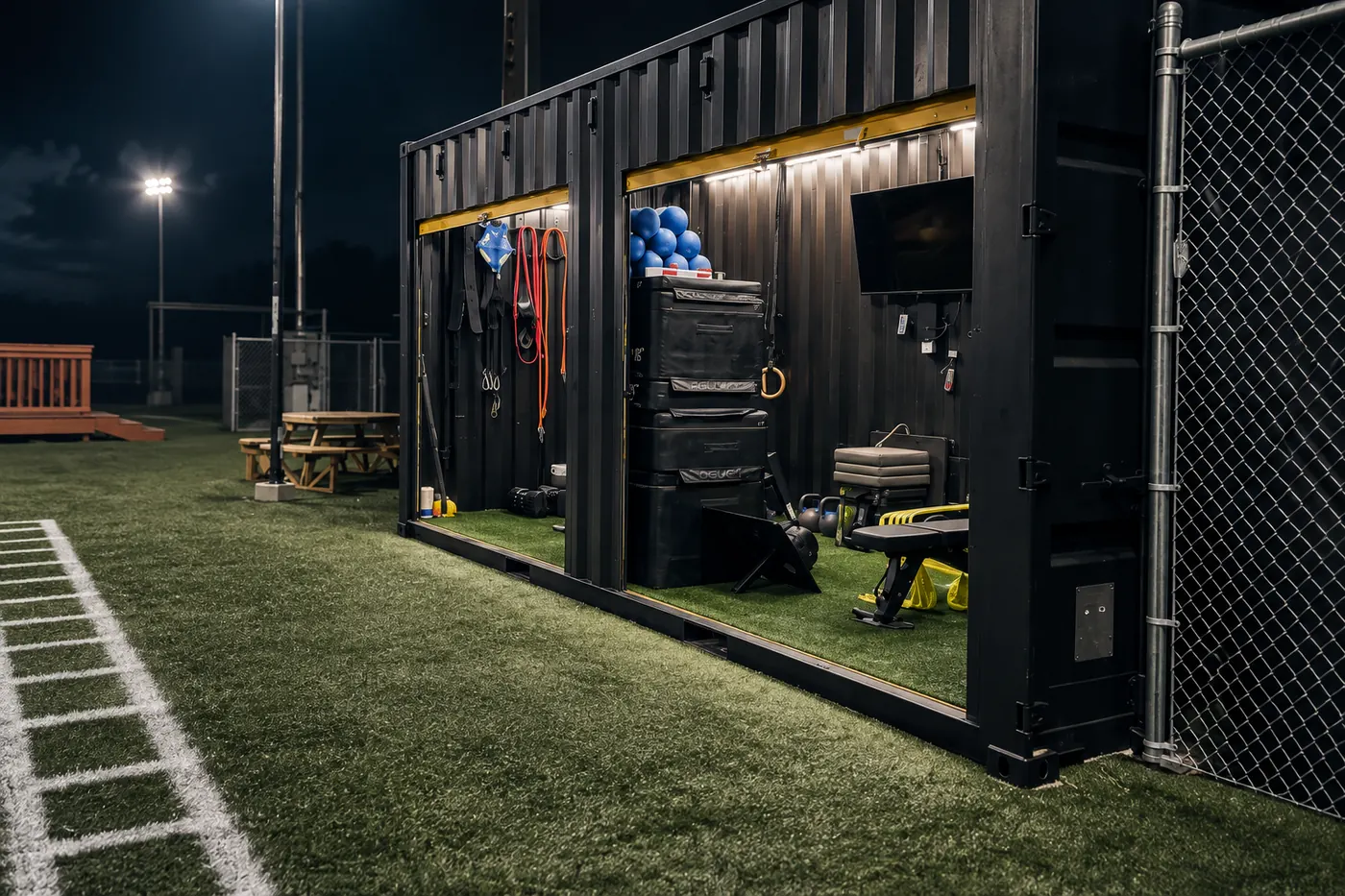
The first FLXPOD started beside a baseball field. We wanted athletes getting stronger, sprinting, preparing well, and doing consistent developmental work. Fitting it around practice was the difficult part.
Bringing the training closer gave us more ways to organize the day. The pod became a hub for the surrounding space, and we learned by running real sessions, watching what happened, and changing what didn't work.
That remains the useful test: does the environment help coaches deliver the work?
PRINCIPLES
What guides the decisions
Start with the athlete
Define who needs access and what they need to develop. Let those needs shape the training environment.
Make the coach more effective
Plan equipment, storage, and movement so coaches can spend more attention teaching and less time solving avoidable interruptions.
Build around real conditions
Account for limited space, shared schedules, staff availability, and budgets. A plan has to work on an ordinary afternoon.
Learn from use
Keep testing layouts and operating ideas against what athletes and coaches actually do. Experience should improve the next decision.
CO-FOUNDERS
The people behind FLXPOD
FLXPOD was co-founded by:
The work ahead is to make the lessons from the first FLXPOD useful and repeatable for the next program.
NEXT STEP
Put the mission to work at your facility
Tell us which athletes need better access and what gets in the way today. That's the starting point for a useful conversation.