
Key takeaways
- A six-week summer program generated enough revenue to cover the original FLXPOD investment.
- The system can support athlete development throughout the day by using the pod as a hub for the surrounding training space.
- Placing training beside the field made physical development part of practice instead of another appointment.
- Unused space can become meaningful athletic capacity without requiring another conventional building project.
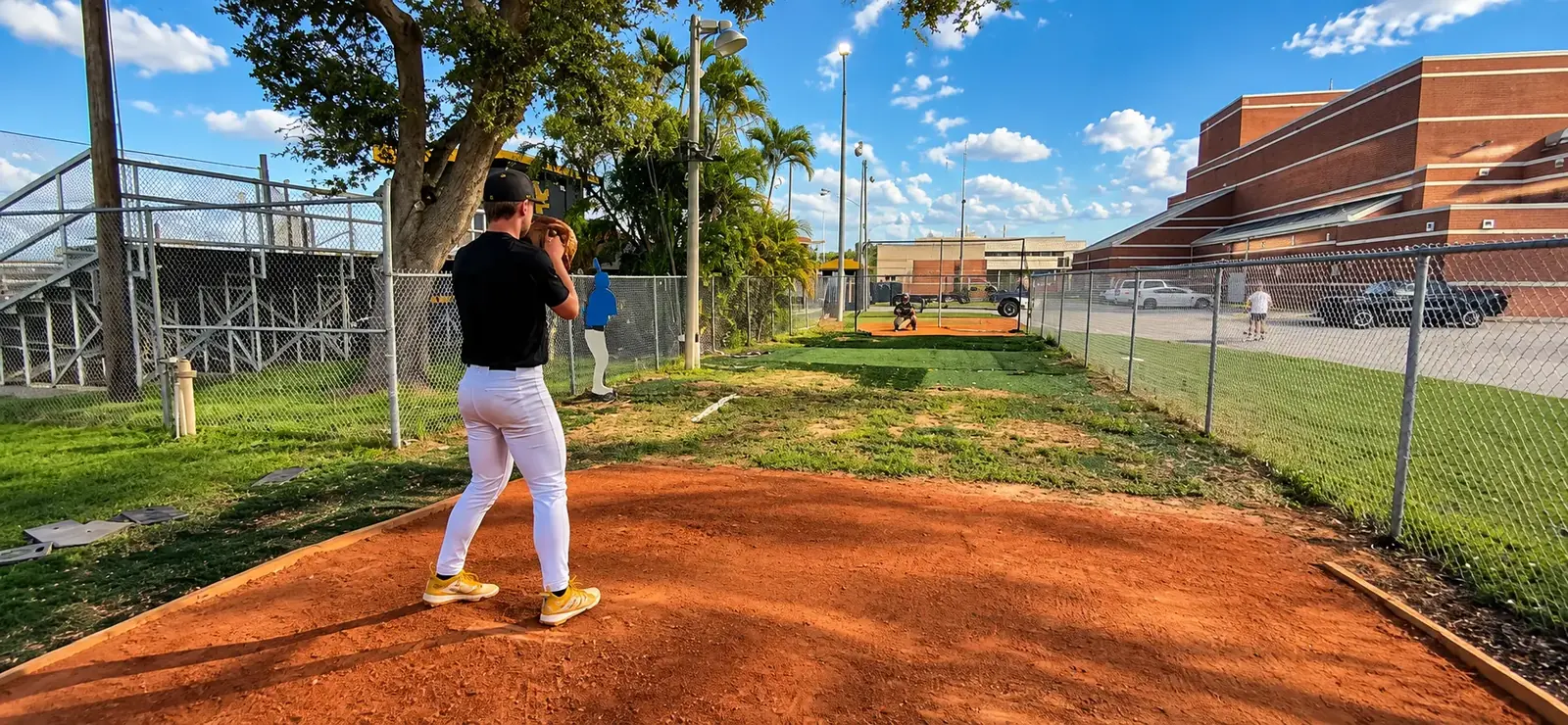
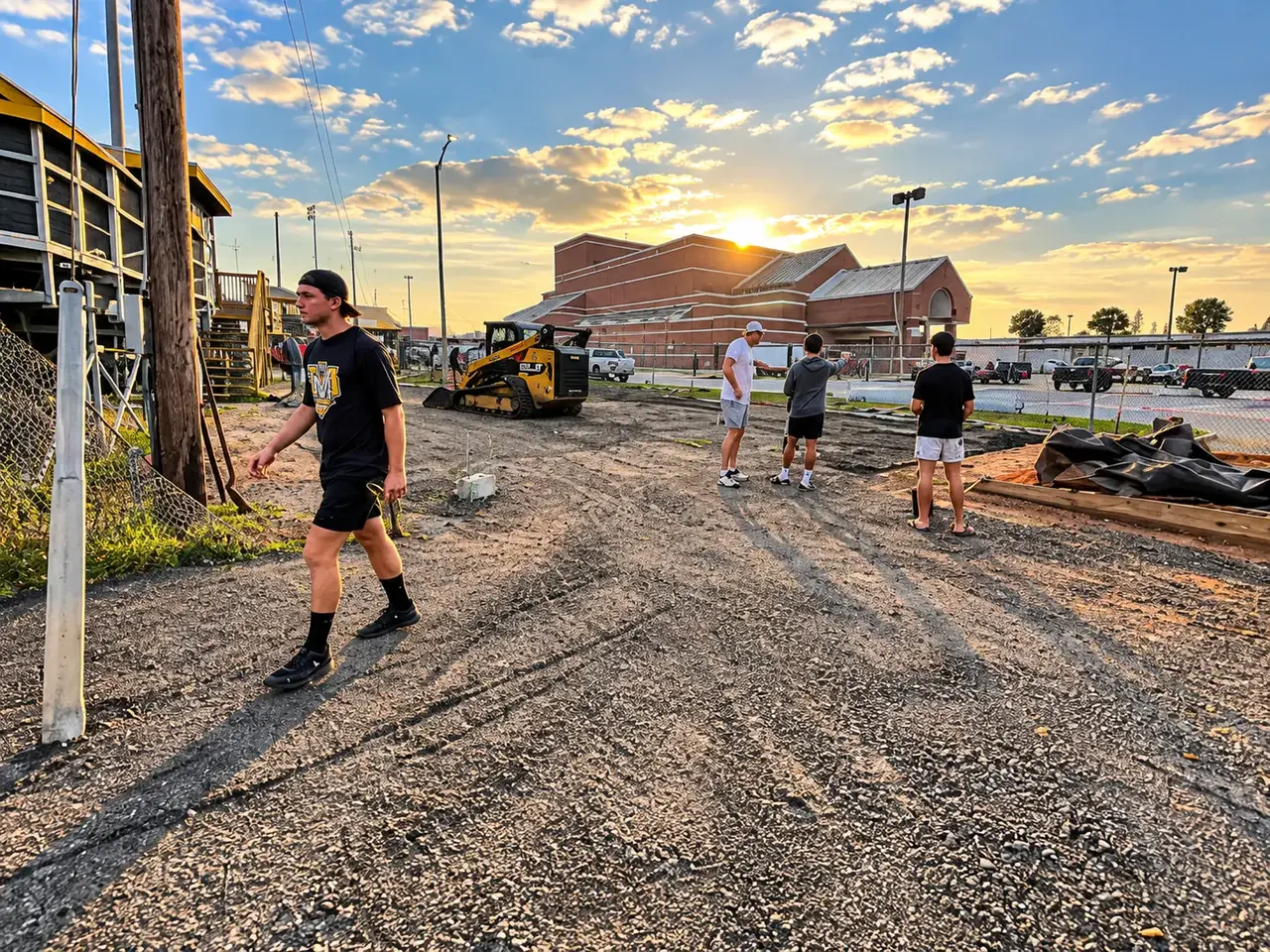
There was a patch of ground beside our baseball field that wasn't doing much.
A few trees. Some unused space. Nothing you would have looked at and thought, athlete development facility.
At the same time, we had a problem almost every coach understands.
We wanted our athletes getting stronger. We wanted them sprinting. We wanted better preparation before practice, more consistent arm care, power work, movement quality and conditioning.
The problem wasn't knowing what to do.
The problem was fitting it all into the day.
The weight room was somewhere else. Other teams needed it. Athletes had school, practice and family commitments. Every transition took time. Ten minutes walking somewhere doesn't sound like much until you're moving an entire team, five days a week, for an entire season.
Eventually, something gets cut.
Usually, it's the work everyone agrees is important but nobody can figure out where to put.
That was the problem that led to the first FLXPOD.
The Idea Was Pretty Simple
What if we stopped taking athletes to the gym and brought the gym to the athletes?
Put it beside the field.
Not across campus. Not somewhere athletes needed to visit before school. Not as another session after practice.
Right where they were already going.
That sounded almost too simple.
And simple ideas have a funny way of sounding obvious after they work.
At the time, we didn't know.
Could we actually create a useful performance environment in a small footprint? Would athletes use it? Could one coach manage enough athletes through it? Would it make practice easier or just create another logistical headache?
And there was another question that mattered just as much:
Could we afford it?
Those questions followed the project all the way through the first build.
We designed it. Changed things. Made mistakes. Changed them again. Put equipment in places that looked good on paper and then realized they made no sense once athletes started moving.
That's the difference between designing a gym and operating one.
Athletes have a way of telling you very quickly whether your idea was any good.
So we stopped theorizing and opened the doors.
The First Real Test
The first serious test came during a six-week summer athlete-development program.
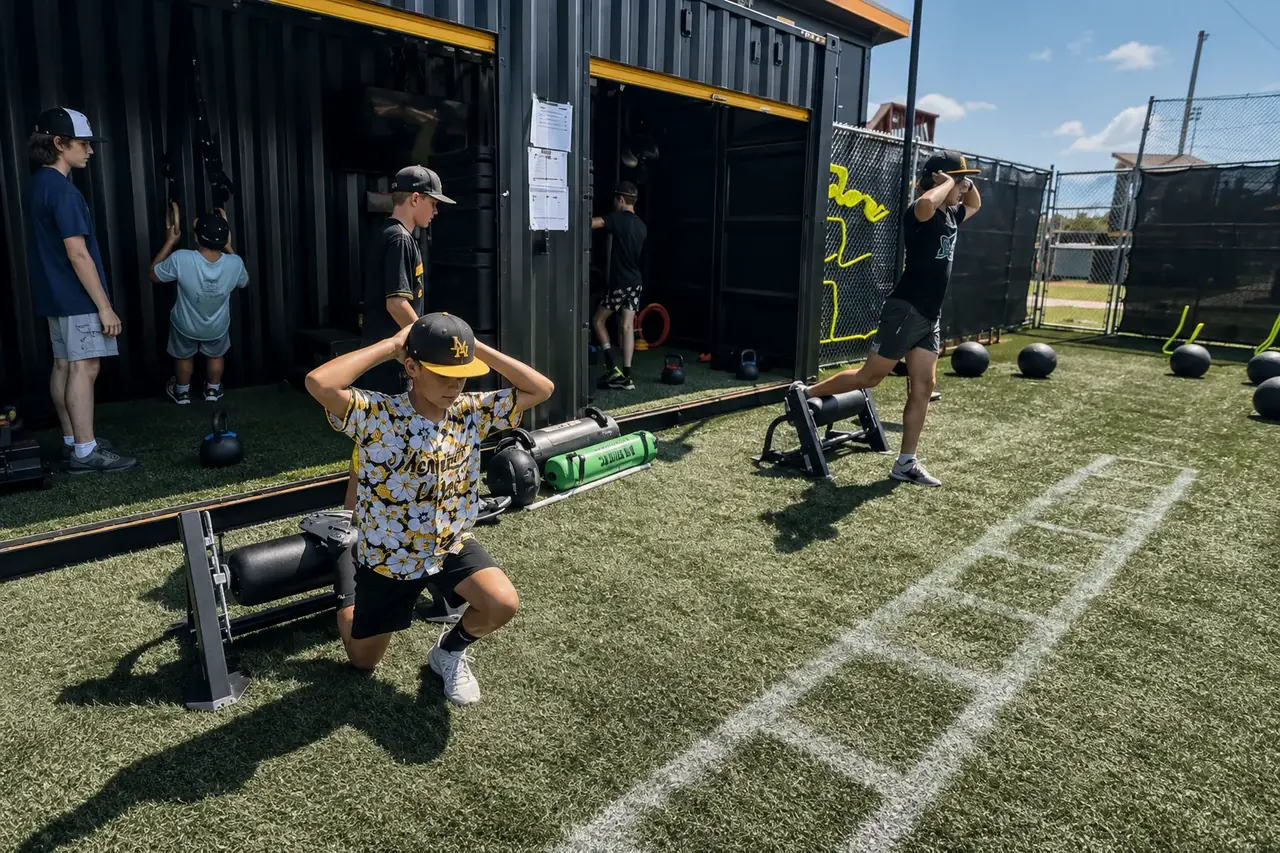
Athletes could train two or four days per week. We used the FLXPOD as the center of a broader training environment that included speed, strength, power, preparation and baseball development.
We weren't just testing the workouts.
We were testing the whole idea.
Would families value it?
Would athletes show up consistently?
Could we organize groups efficiently?
Would athletes improve?
Would they want to come back?
That last question matters.
You can write the best program in the world, but if athletes hate the process, participation becomes another problem the coach has to solve.
That wasn't what happened.
The athletes bought in.
They competed. They started paying attention to their numbers. They learned how to train. They encouraged each other. Parents began telling us their kids were coming home excited about what they had done.
The training environment started developing its own energy.
That was our first sign that we might have something.
But it wasn't the most important one.
Then It Paid for Itself
From the beginning, we knew FLXPOD couldn't simply be a cool piece of equipment sitting beside a field.
Athletic directors don't need more things to buy.
They have plenty.
Every dollar already has a job. Uniforms. Transportation. Fields. Coaches. Equipment. Maintenance. Technology. Facility projects.
So if we were going to create another piece of athletic infrastructure, we wanted it to do more than consume budget.
We wanted to know whether it could create value.
The summer gave us our first answer.
The revenue generated through six weeks of programming was enough to cover the original investment in the first FLXPOD.
That was a big moment for us.
We didn't have to wait ten years to justify the purchase. We didn't have to point to some hard-to-measure future benefit and say, ‘Trust us, this was probably worth it.’
We had built the infrastructure, used it to create athlete-development programming, and generated enough revenue through that programming to recover the original investment.
Now think about the difference.
A traditional facility is usually treated as an expense.
You raise the money.
You build it.
You equip it.
Then you start using it.
A FLXPOD can potentially operate differently.
The school, booster club, club program or performance organization can use it to create camps, clinics, summer programs, feeder programs and other athlete-development opportunities.
That doesn't mean every FLXPOD will automatically pay for itself in six weeks. Programming, pricing, participation and market all matter.
But the first one proved something much more important:
The model can work.
The facility doesn't only have to consume capital.
It can help create it.
But the Bigger Return Has Been Time
The financial result surprised us.
The time savings may be even more important.
Coaches rarely talk about time as infrastructure, but they should.
Imagine moving 30 athletes from a field to a weight room.
Practice pauses.
Athletes grab their things.
Everyone walks across campus.
Someone needs the bathroom.
Two players are talking instead of moving.
Another team hasn't finished in the weight room.
Now you're waiting.
Eventually everybody gets organized and starts lifting.
Then you have to reverse the process.
Ten minutes here. Five minutes there. Another ten waiting.
Nothing feels disastrous.
That's what makes it dangerous.
You don't notice the loss because it happens a few minutes at a time.
But multiply those minutes by 30, 50 or 100 athletes. Multiply them by four or five days. Then multiply that by an entire school year.
That's a lot of development time disappearing into transitions.
FLXPOD changed that for us.
Our athletes are already at the field.
The training is already at the field.
So instead of asking, ‘When are we going to the weight room?’ we started asking a better question:
Where does this piece of athletic development fit inside practice today?
That changed everything.
We Stopped Treating Training and Practice as Two Different Things
Traditionally, the schedule looks something like this:
Practice.
Then strength and conditioning.
Or strength and conditioning.
Then practice.
That separation immediately creates another scheduling problem.
Which happens first?
How long do we have?
Who has the weight room?
What if practice runs long?
What if an athlete needs to leave early?
What if the next team is waiting?
Once the FLXPOD was beside the field, we stopped thinking that way.
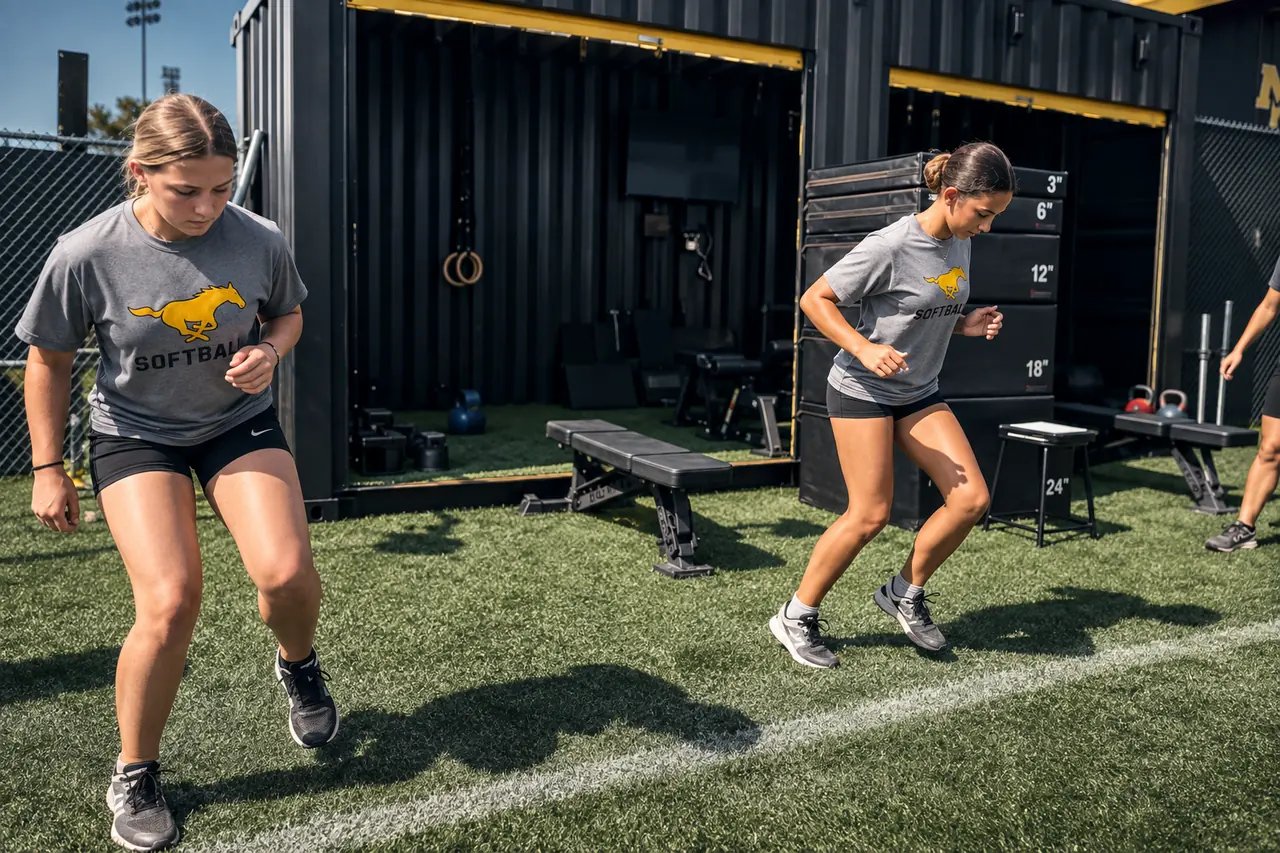
Our athletes can begin with preparation work and speed development. Then we move into baseball practice. Certain groups can rotate through power, arm care or other developmental work. Strength training can happen as athletes complete practice.
The exact flow can change by day.
That's the point.
We don't have to move the team to another destination to begin developing athletes.
The performance environment is already there.
Training became part of practice instead of competing with practice.
That's a much bigger distinction than I initially understood.
Convenience isn't a luxury. Convenience creates consistency.
When the good choice is also the easy choice, athletes do it more often.
The School Year Was the Real Stress Test
Summer was encouraging, but summer is also forgiving.
The school year isn't.
Now there are classes, games, rain, different dismissal times, multiple teams, academic commitments and coaches trying to solve three things at once.
This was the environment I really wanted to see.
Could FLXPOD survive a normal afternoon?
Not a photo shoot.
Not a demonstration.
Tuesday at 3:30 when everybody needs something.
That is the test.
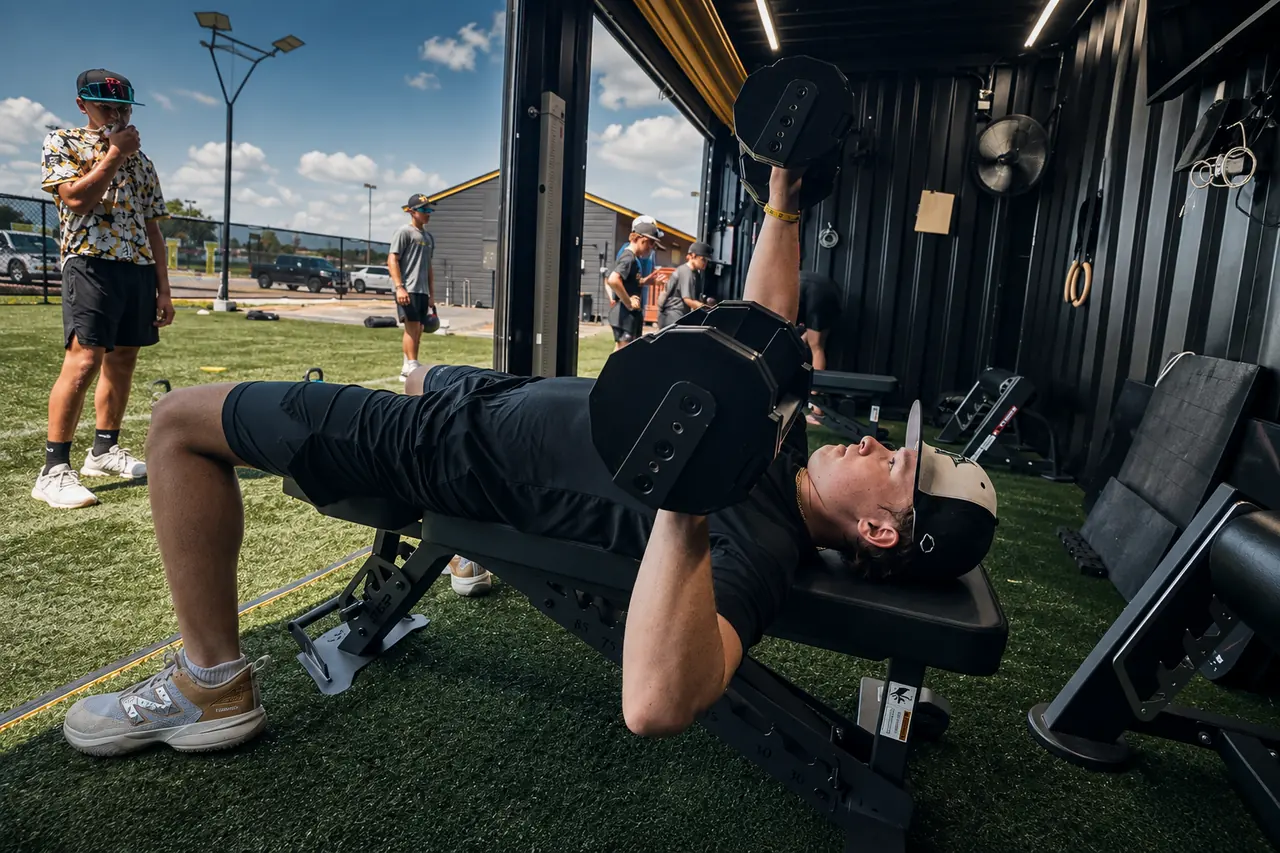
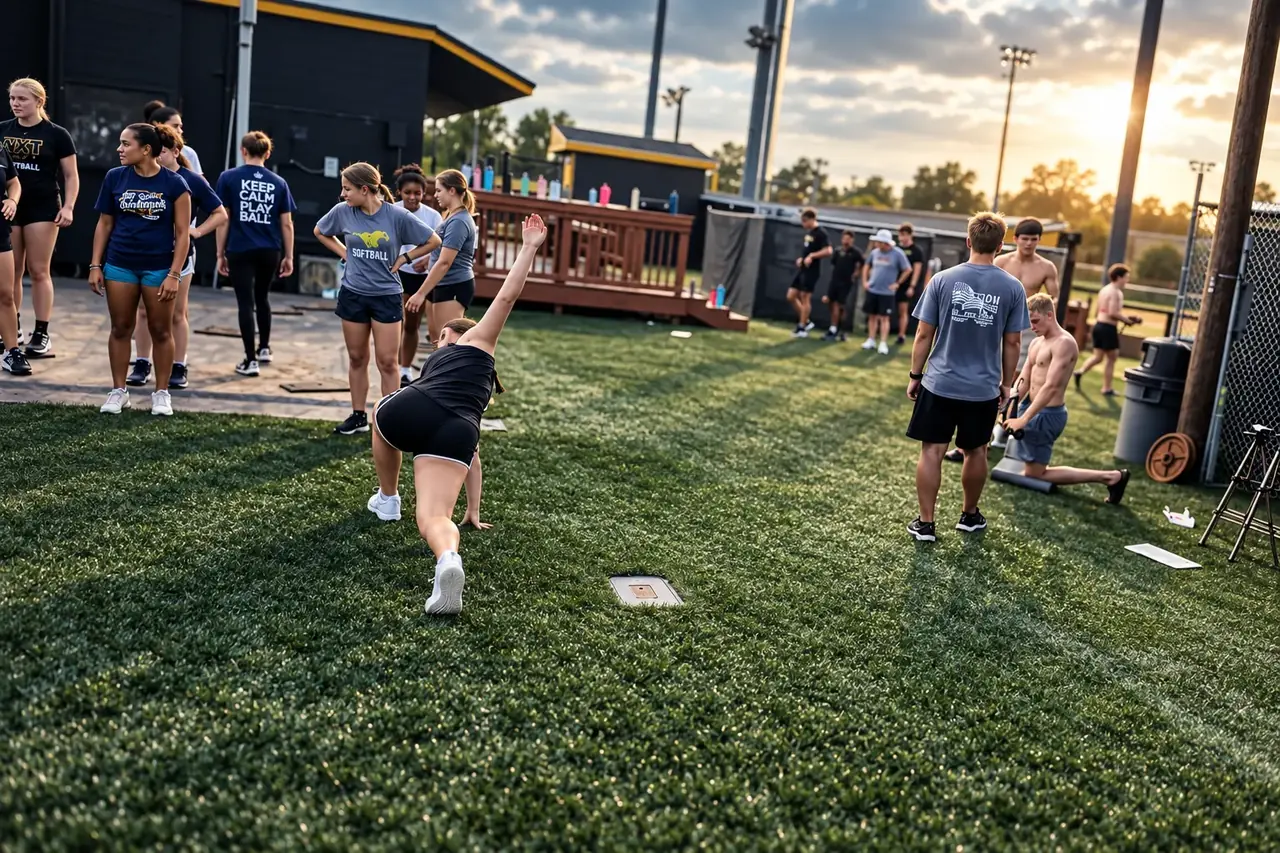
Today, nearly 75 athletes can move through the performance environment on a typical afternoon across our baseball program, softball athletes and feeder athletes, with one performance coach operating the system.
And I don't view 75 as the ceiling.
What we're learning is how to create an operating model that can support significantly greater daily throughput as groups, schedules and stations are organized around the system.
That was the moment my thinking changed.
I had originally thought of FLXPOD as a small performance facility.
I don't anymore.
I think of it as a way to add performance capacity to an athletic program.
Those are different things.
Small Footprint. Big Throughput.
This is where square footage can be misleading.
People look at a 20-foot FLXPOD and naturally compare it with a weight room.
That's the wrong comparison.
The pod isn't trying to put 40 athletes inside a container.
The FLXPOD becomes the equipment and coaching hub for the training environment around it.
The field becomes useful training space.
The turf becomes useful training space.
The area immediately outside the pod becomes useful training space.
Suddenly you're not evaluating 160 square feet.
You're evaluating what that infrastructure allows you to do with the thousands of square feet already sitting around your athletic fields.
That's what happened with us.
The first FLXPOD transformed unused space beside the field into an active performance environment.
The building didn't have to get bigger.
The campus got more useful.
The Best Capacity May Be the Capacity You Already Own
Athletic programs often assume they have a space problem.
Sometimes they do.
But sometimes they have an access problem.
There may already be thousands of square feet around practice fields, stadiums and courts.
What is missing is the infrastructure that makes those spaces useful for athletic development.
That's an important distinction.
If the only answer to a crowded weight room is another building, many schools are going to wait a long time.
Construction takes planning.
Planning takes approvals.
Approvals take budgets.
Budgets take fundraising.
Fundraising takes time.
A freshman can become a senior while adults are still discussing the capital project.
Meanwhile, athletes are practicing every afternoon.
That was one of the reasons we kept coming back to FLXPOD.
We weren't trying to replace the traditional weight room.
A great centralized strength facility is an enormous asset.
We were solving a different problem:
What do we do when the existing weight room is good, but there isn't enough access to it?
Add capacity where the athletes already are.
The Environment Started Changing Too
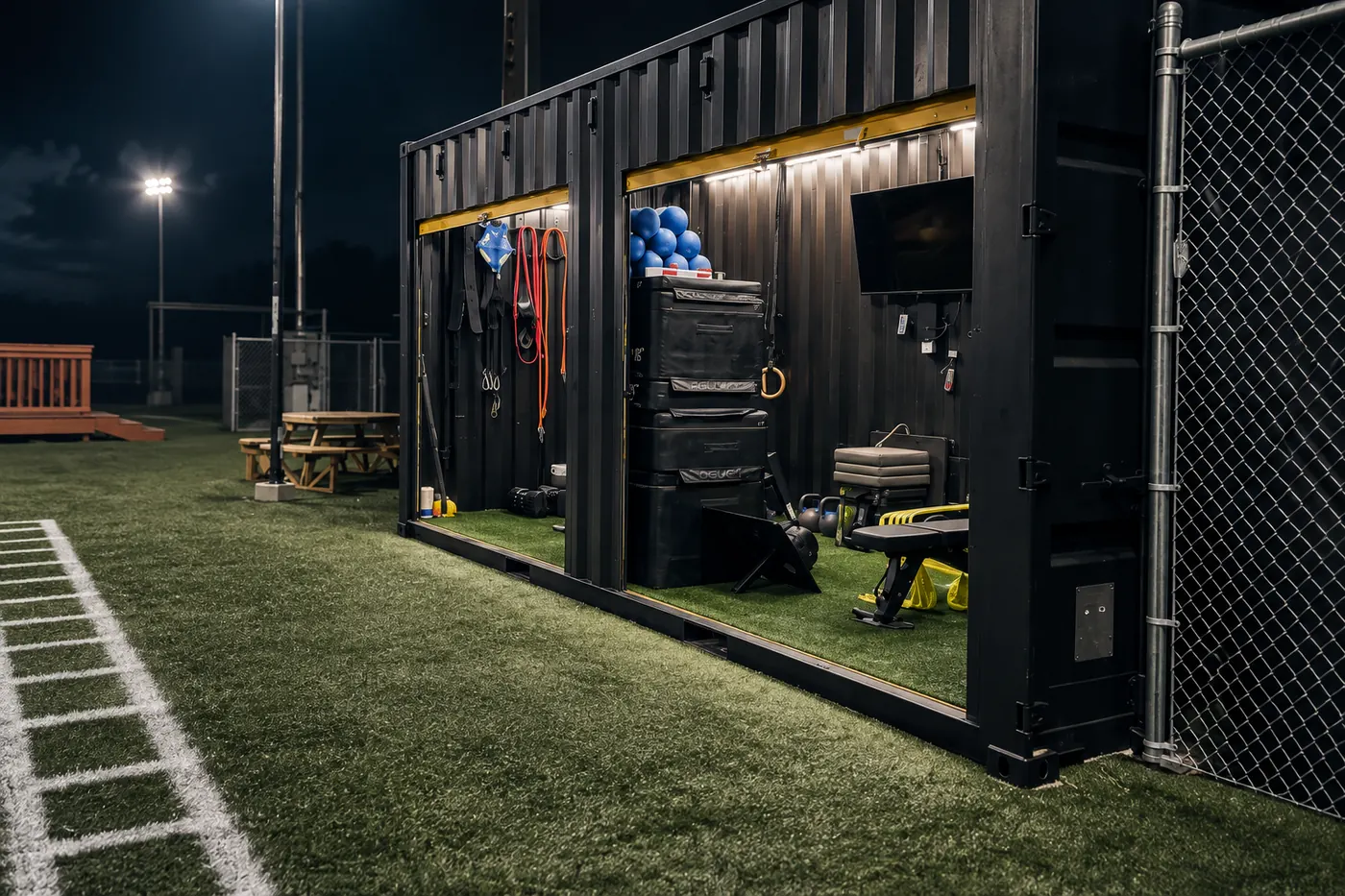
There was a night during the early stages when the field lights were on, athletes were training, music was playing and I stood back for a minute.
For a long time, FLXPOD had existed as sketches, conversations, CAD drawings, equipment lists and problems.
A lot of problems.
Then suddenly it was real.
Athletes were moving through it exactly the way we had hoped.
Maybe not exactly. Nothing ever works exactly the way you draw it.
But it was working.
And the interesting part wasn't the container.
It was the athletes.
They had started treating the space like it belonged to them.
They wanted to train there.
They competed there.
They took pride in the environment.
The FLXPOD had become part of the program.
That was not something I had put on the original spreadsheet.
The “Cool Factor” Is Real
I used to underestimate this.
Coaches like to believe athletes don't care what a facility looks like.
Just give them a barbell and tell them to work.
There is some truth in that.
Good athletes will train almost anywhere.
But environment still matters.
Walk into a professional training facility and you feel that somebody thought about the experience.
Equipment has a place.
The lighting is right.
There is energy.
You feel like training.
High-school athletes notice that too.
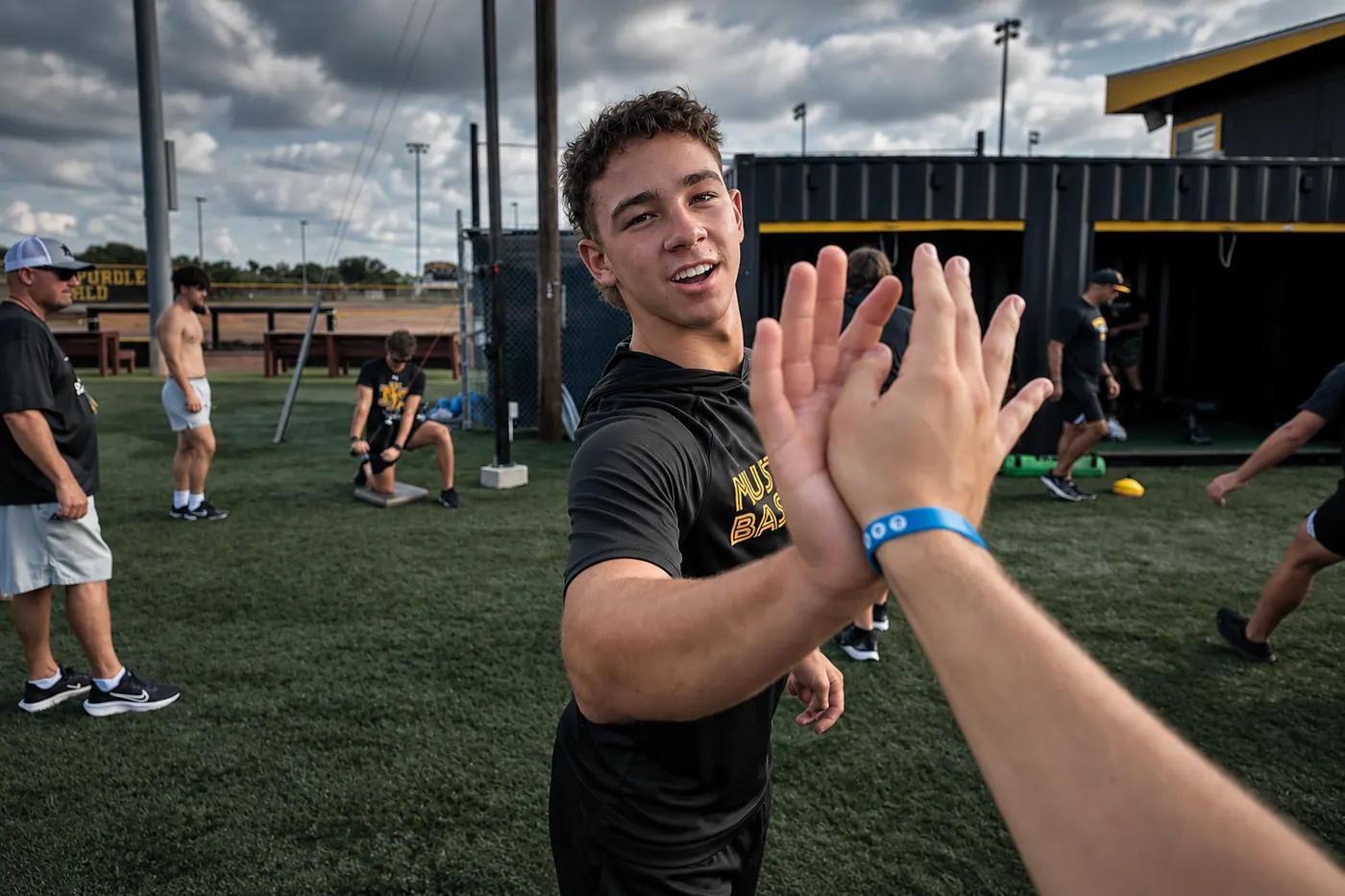
The FLXPOD is open to the field. Athletes move naturally between training and practice. Teammates see each other working. Music is playing. The equipment is organized around the way they actually train.
I've joked that it feels a little like putting Venice Beach beside your athletic field.
The athletes like it.
That matters because the environment reinforces the behavior we're trying to create.
Training isn't something they're being sent away to do.
It's happening right in front of everyone.
That Starts Affecting Culture
The younger athletes notice.
They see varsity players training.
They see the speed work.
They see the strength work.
They see older athletes competing and encouraging each other.
And they can picture themselves there.
That's important.
Athletic programs spend a lot of time trying to build culture through meetings, slogans and social media.
Those things have their place.
But culture is mostly repeated behavior.
When athletes repeatedly see training as part of being in the program, training becomes part of the identity of the program.
The summer program helped us extend that further into our feeder system.
Athletes can begin learning our expectations before they ever make a high-school roster.
That's a much better development model than starting from zero every year.
What I Got Wrong
I thought the biggest selling point would be the equipment.
Then I thought it might be the additional space.
Both matter.
But neither is the biggest benefit.
The biggest benefit is proximity.
Put the training where the athletes already are and a surprising number of other problems become easier.
Scheduling gets easier.
Transitions get easier.
Supervision gets easier.
Consistency gets easier.
Athlete development becomes easier to weave into practice.
And because that infrastructure can also support paid programming, the financial conversation changes.
That is the lesson I would take from the first FLXPOD.
Not more equipment. Less friction.
What We Know Now
I still believe in testing ideas in the real world.
We're continuing to improve equipment layouts, programming, storage, workflow and the operating standards around FLXPOD.
We should.
That's what good companies do.
But there is an important difference between improving a product and wondering whether the fundamental idea works.
We are no longer wondering.
The first FLXPOD has operated through summer programming and the school year. It has supported dozens of athletes on normal training days. One coach has been able to manage the environment. Athletes use it consistently. Training has become easier to integrate into practice. And the first six-week summer program generated enough revenue to cover the original FLXPOD investment.
Those aren't renderings.
They're operating results.
We will continue improving the system because experience always exposes things drawings can't.
But the core thesis has been proven in the environment that matters most:
The field.
We Aren't Trying to Build a Smaller Weight Room
This may be the most important point.
FLXPOD isn't really about putting a gym in a shipping container.
If that's all we were doing, I'm not sure the idea would be very interesting.
We're building distributed performance infrastructure.
A way for schools, clubs and teams to add professional-grade athletic-development capacity without immediately taking on another major building project.
A way to put training beside baseball fields, soccer complexes, football stadiums or wherever athletes already practice.
A way to reclaim time coaches are currently losing to movement, waiting and scheduling conflicts.
And, as our first unit demonstrated, a way for that infrastructure to potentially create programming revenue rather than existing solely as another line on the expense side of the budget.
That's a much bigger idea than a box.
The Question Has Changed
Early on, the question I heard most was:
Will this actually work?
It was a fair question.
We were asking coaches and athletic leaders to look at performance infrastructure differently.
Now we've built it.
We've trained athletes through it.
We've run it during real practices.
We've put enough athletes through it to understand the operating model.
We've seen what happens when the training environment is placed directly beside the sport environment.
And we've seen the first FLXPOD generate enough program revenue to cover its original investment.
So my answer today is different.
Yes.
It works.
We will keep refining FLXPOD because we intend to make the system better with every unit we build. But we're no longer trying to prove whether athletes will use it, whether coaches can operate it or whether the economic model can work.
We've answered those questions.
The opportunity now is to take what we've learned from the first one and make it repeatable for the next school, club and performance program.
Because when you remove the walk, remove the wait and put athletic development where practice already happens, you don't just add another place to lift.
You give coaches back time.
You give athletes more opportunities to develop.
And you give the program an asset that can help earn back the money invested in it.
That's what we set out to build.
It just took building the first one to understand how valuable that could actually be.
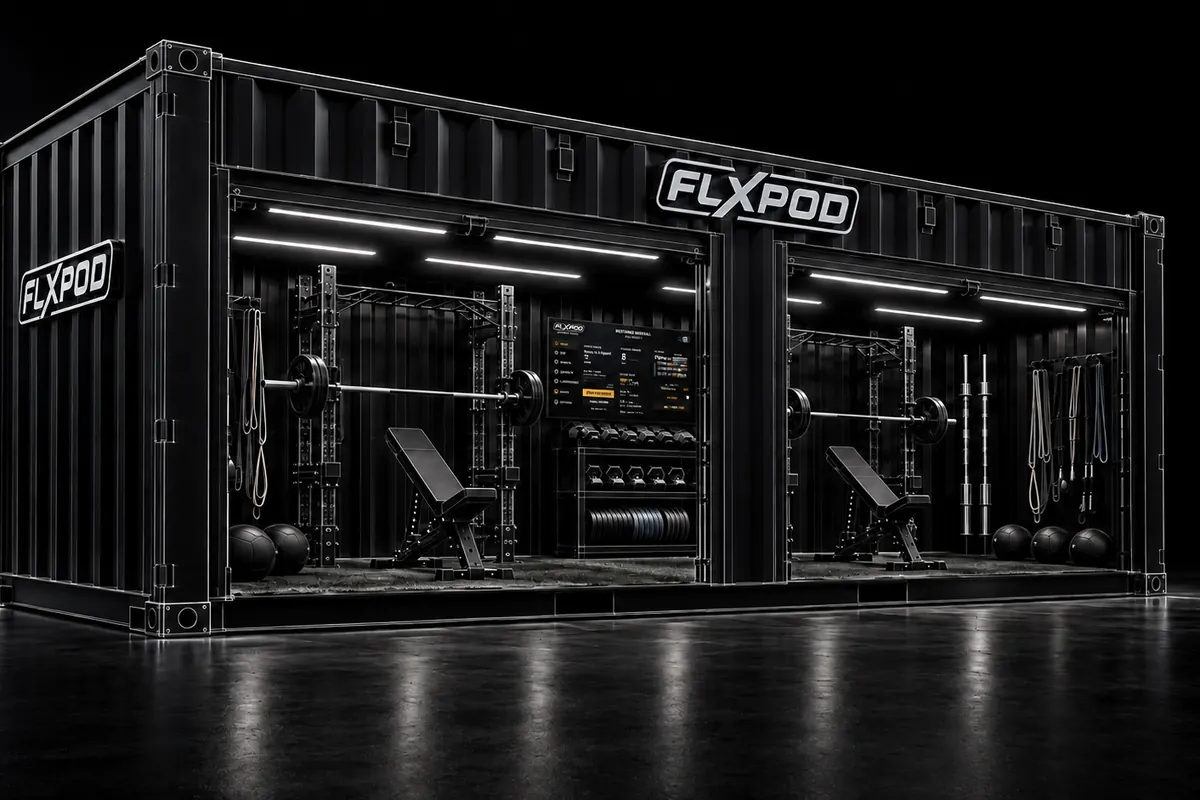
Prototype installation shown; final production configurations may vary. This describes one program’s experience. Actual results depend on scheduling, staffing, program design, demand, pricing, and costs.