
Key takeaways
- A six-week summer program generated enough revenue to cover the original FLXPOD investment.
- The system can support athlete development throughout the day by using the pod as a hub for the surrounding training space.
- Placing training beside the field made physical development part of practice instead of another appointment.
- Unused space can become meaningful athletic capacity without requiring another conventional building project.
Most athletic programs don't have a lack-of-effort problem. Coaches know their athletes should get stronger, move better, run faster, and become more durable. The challenge is finding the time, space, equipment, and supervision to make that happen consistently.
That was the problem behind the first FLXPOD at Merritt Island High School.
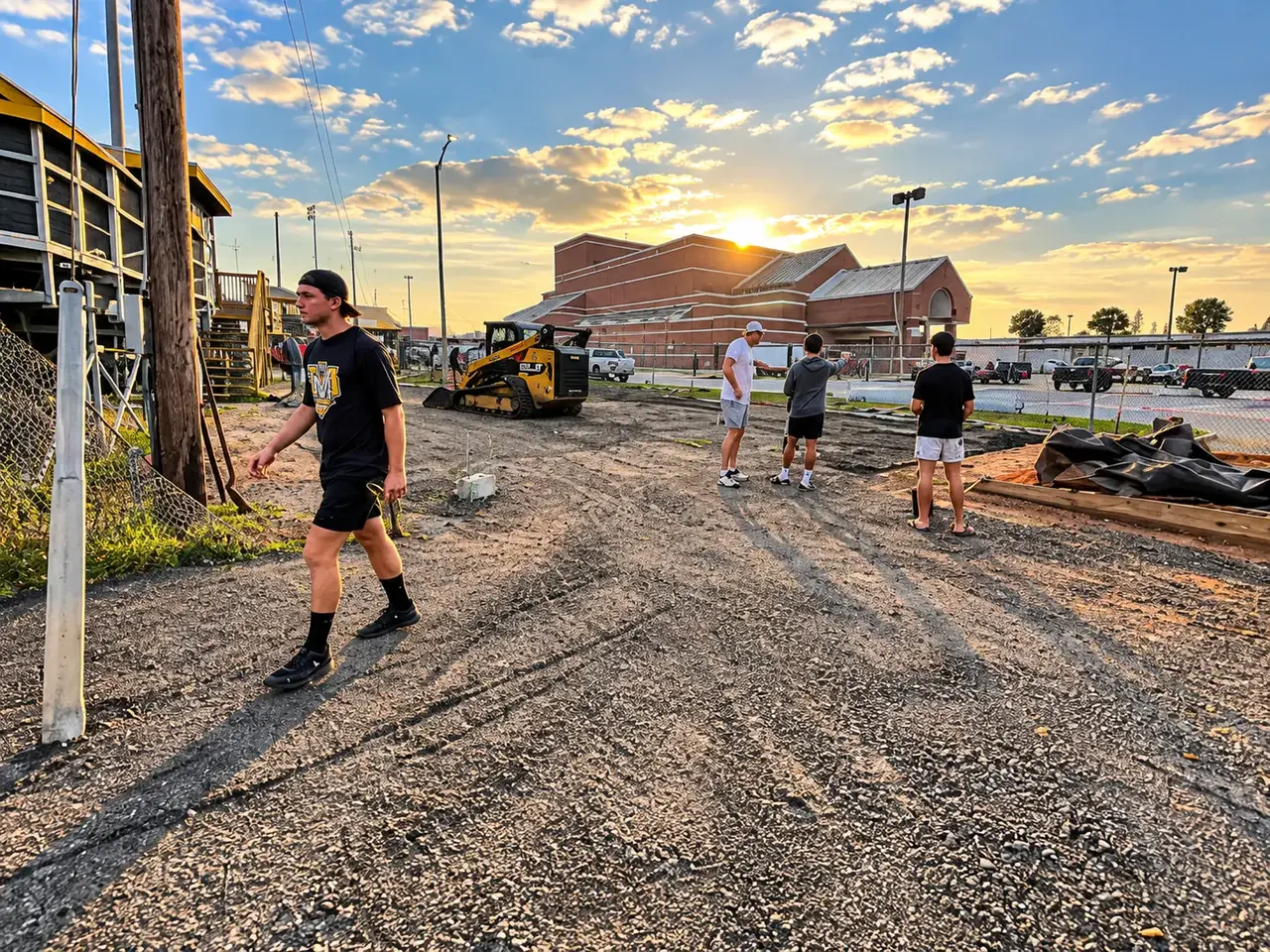
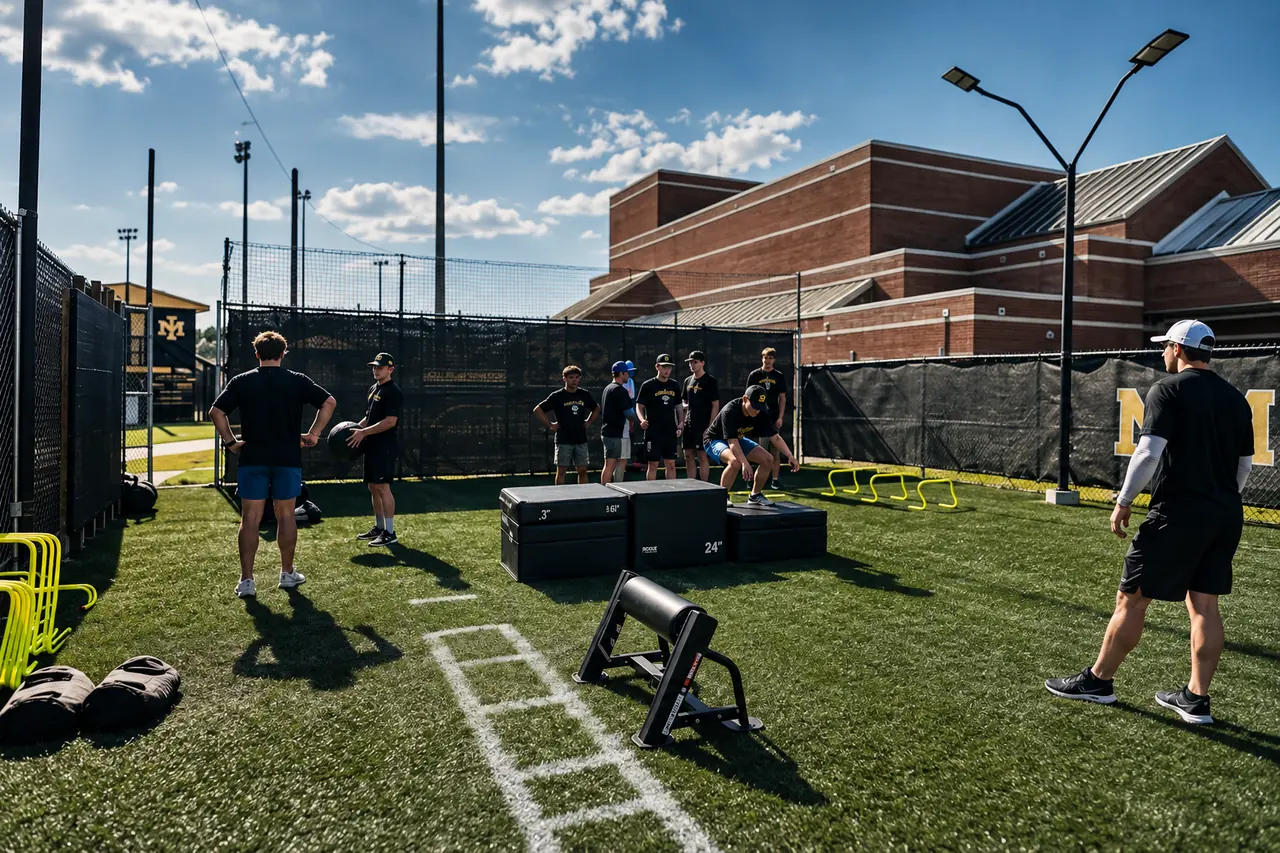
Beside our baseball facility was a piece of ground that wasn't doing much for us. It had trees, uneven terrain, and very little practical use. Today, that same area has become one of the most active parts of the facility. Athletes warm up there, sprint there, train there, and finish practice there. What had been unused space became dedicated athletic capacity.
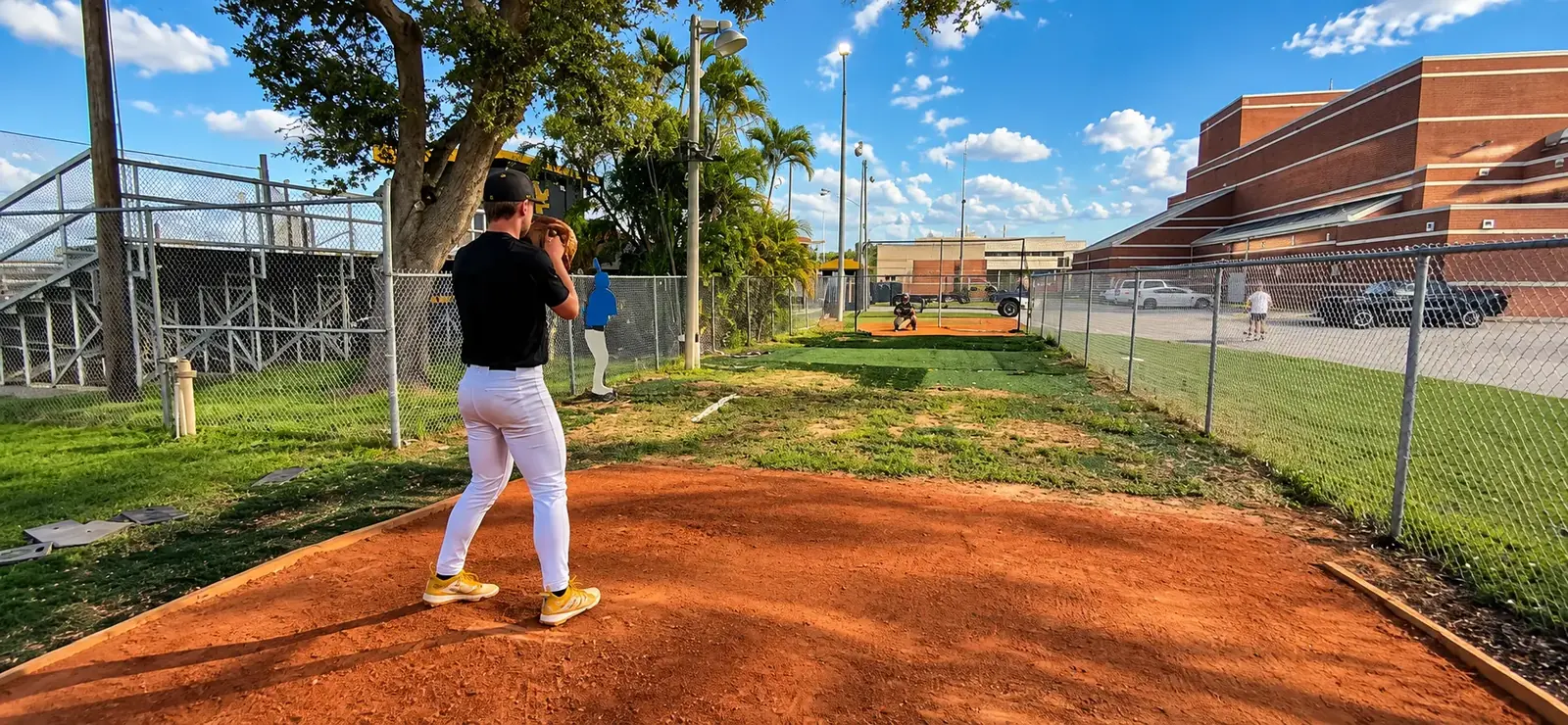
That transformation gets to the heart of the idea. Athletic departments often assume that a capacity problem requires another building. Sometimes it does. But sometimes the better question is whether you can make better use of the space you already have.
The basic FLXPOD idea was simple: put the training resources where athletes already practice.
We Built It to Solve a Real Problem
We didn't build the first FLXPOD as a showroom. We built it because we were experiencing the same problems coaches deal with everywhere: crowded weight rooms, limited practice time, multiple teams competing for the same space, and athletes being pulled in different directions.
Traditional strength training usually happens somewhere else. That creates another transition in an already busy day. Get everyone together, walk across campus, wait for equipment, train, and then get everybody back to practice.
Each individual delay seems small. Add them together over an entire season and they become a lot of lost training time.
The goal was to eliminate as much of that friction as possible.
The Summer Was Our First Real Test
We used a six-week summer program to find out whether the concept actually worked. Athletes had the opportunity to train two or four days per week, and the goal was bigger than simply running a good camp.
We wanted to know whether athletes would consistently show up, whether they would improve, whether coaches could operate the system efficiently, and whether families would see enough value to want to return.
Most importantly, we wanted to know whether the athletes would actually enjoy training there.
That may sound secondary, but it isn't. A training program only works when athletes participate consistently. If the environment makes them want to come back, you've already solved an important part of the problem.
The feedback from families was one of our first signs that the concept had legs. Parents told us their athletes were excited to return, talked about what they had learned when they got home, and were already looking forward to training again the following summer.
Then the Economics Got Interesting
The next question was financial.
Athletic departments and booster organizations have limited resources. Every dollar spent on one project competes with uniforms, field improvements, travel, equipment, staffing, and dozens of other needs.
In our case, revenue generated through the six-week summer program was enough to cover the original investment in the FLXPOD.
We don't publish the underlying dollar amounts because the exact number isn't the important part. The meaningful point is that the initial infrastructure paid for itself. From that point forward, additional dollars could go toward improving the system rather than recovering the original investment.
That experience changed the way we thought about athletic facilities. A training space doesn't necessarily have to remain a permanent expense. If it is used intentionally, it can become an asset that supports the program around it.
Do You Need Another Building, or More Training Capacity?
When a school runs out of weight-room space, the conventional answer is often to expand the weight room or build a larger facility.
Sometimes that's absolutely the right decision. But those projects usually require substantial capital, design, approvals, permitting, contractors, and time. A school can spend months or years moving from idea to usable space.
Meanwhile, athletes still need somewhere to train today.
That's where we think FLXPOD solves a different problem. It doesn't have to replace the school's main weight room. It can add capacity exactly where another team needs it.
For a baseball or softball program, that may be beside the field. For soccer or lacrosse, it could sit near the practice complex. For football, it might provide additional training capacity near the stadium. The concept is less about the container itself and more about putting useful infrastructure closer to the athletes.
The question becomes much simpler: do we need another building, or do we need more places for athletes to train?
The School Year Has Been the Bigger Test
Summer was one thing. The school year is where the concept really had to prove itself.
Now there are classes, practices, games, multiple teams, changing schedules, and athletes arriving and leaving at different times. The system has to work inside the normal chaos of high school athletics.
On a typical afternoon today, roughly 75 athletes may move through our training environment between baseball, softball, and feeder-program athletes. But we don't see 75 as the limit.
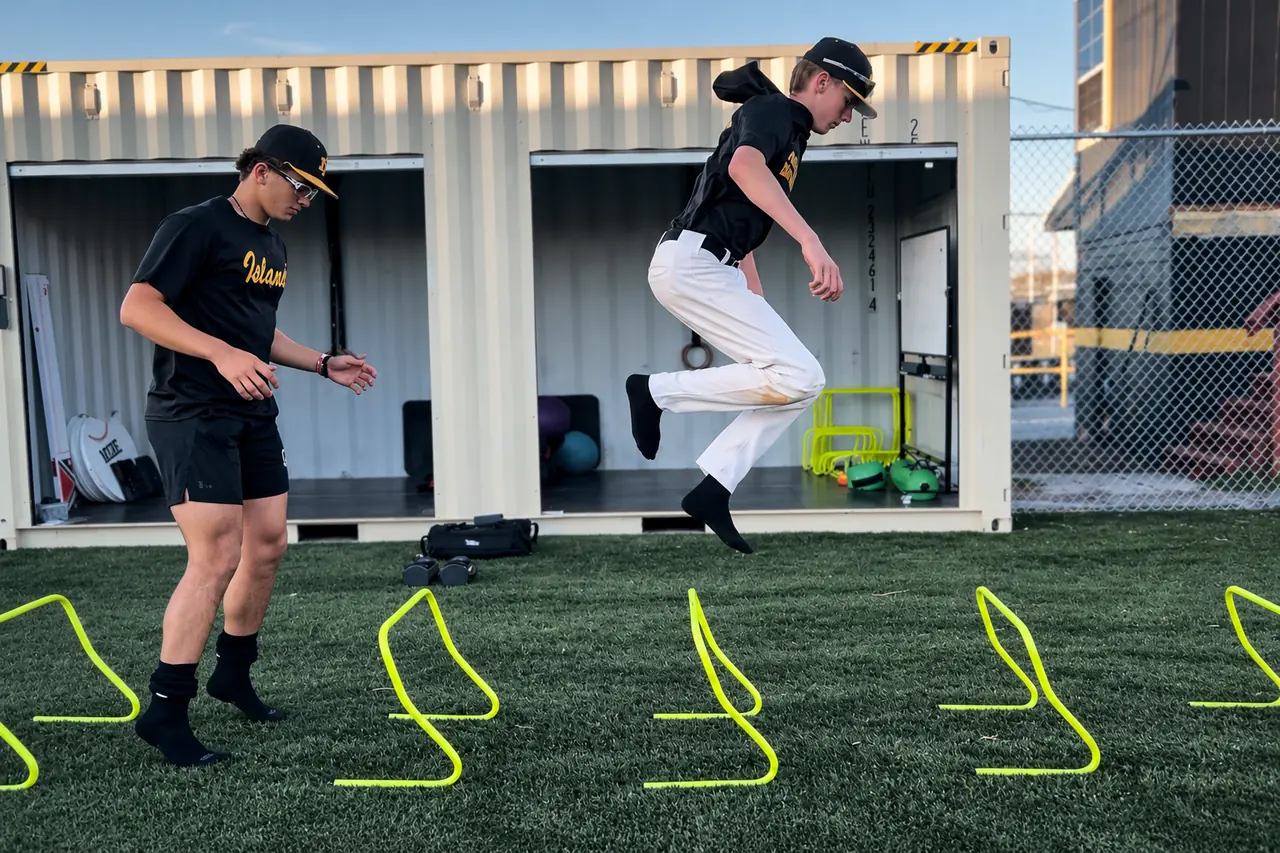
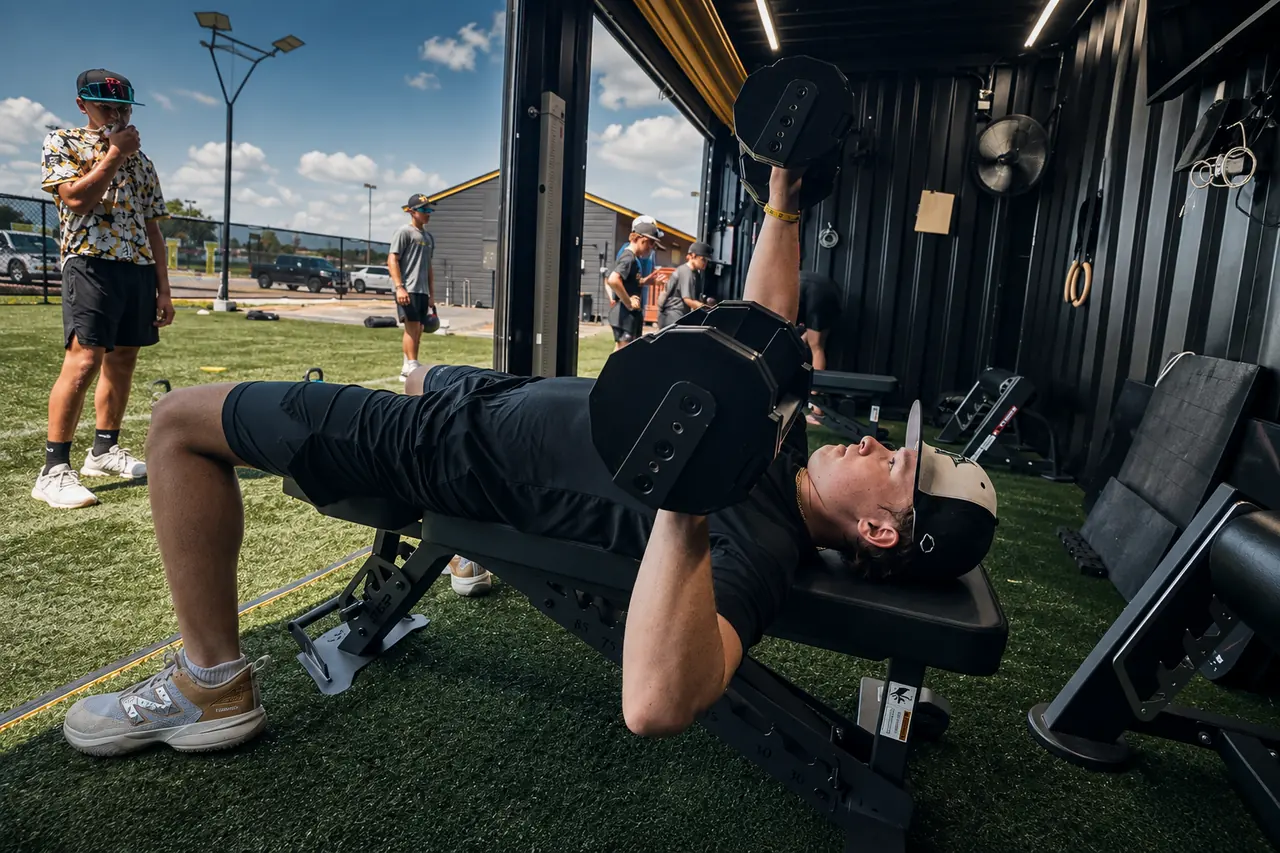
The important thing to understand is that FLXPOD isn't designed to put 75 or 150 athletes inside a container. The pod acts as the hub. The surrounding turf, field, and practice space become part of the overall training environment.
With athletes rotating through throughout the day, we believe the system can realistically support as many as 150 athlete training sessions in a day, depending on programming, staffing, and schedule.
We Stopped Treating Practice and Training as Two Separate Things
This may be the biggest operational change we've made.
Our athletes now start the afternoon with a short warm-up designed to get their bodies ready to run, throw, lift, and practice. From there we work on speed. Then the sport practice begins.
During practice, one group may rotate through simple jumping drills, medicine-ball exercises, or individualized work that helps an athlete improve mobility, balance, or strength in an area that needs attention. When practice is finished, athletes can move directly into their main strength exercises.
None of that requires athletes to leave the facility.
The result is that physical development is no longer another event we have to squeeze into the day. It becomes part of the practice plan.
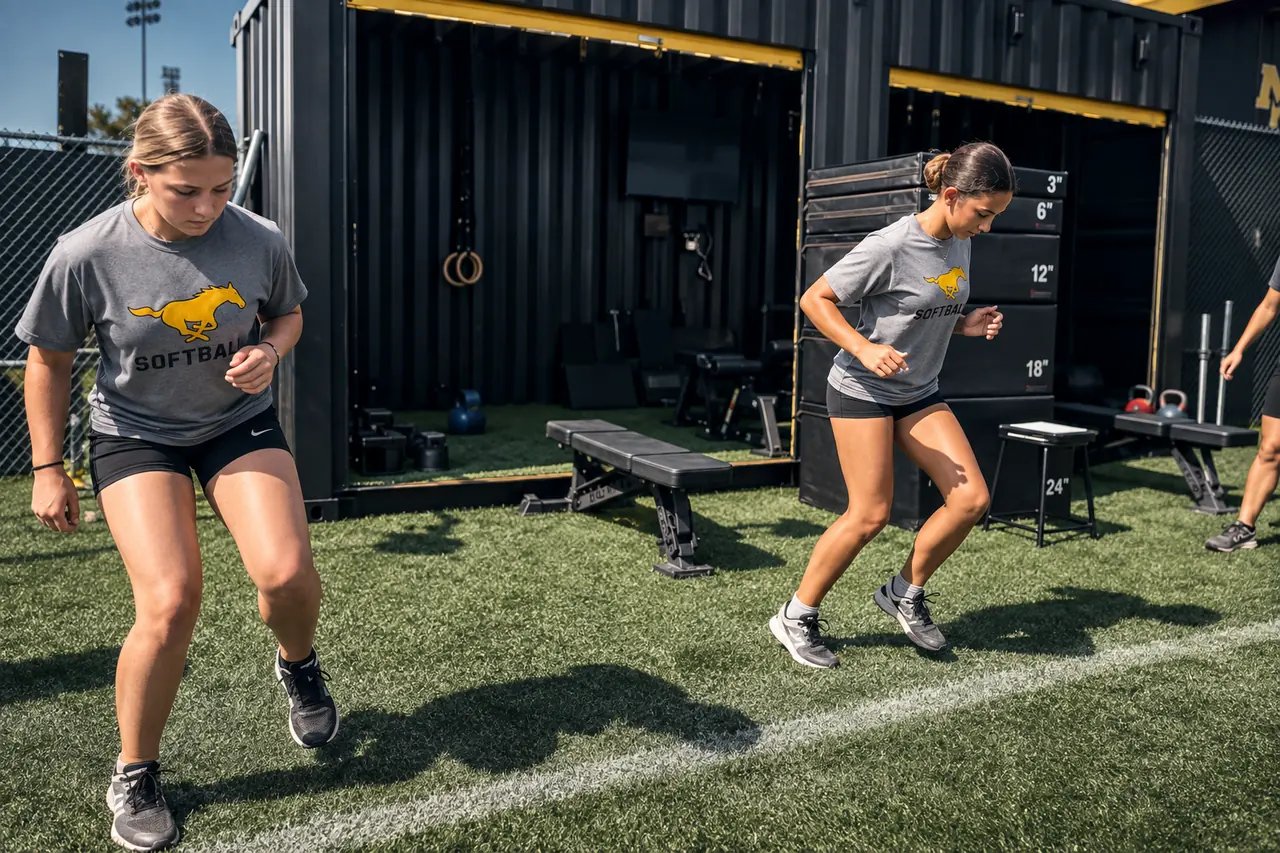
That sounds like a small change, but it has a huge effect on logistics. Less time is spent gathering athletes, moving across campus, waiting for space, and reorganizing groups.
More of the afternoon can actually be spent developing athletes.
The Environment Changed Too
Some of the benefits were things we expected. Others were not.
Athletes like training there.
So do I.
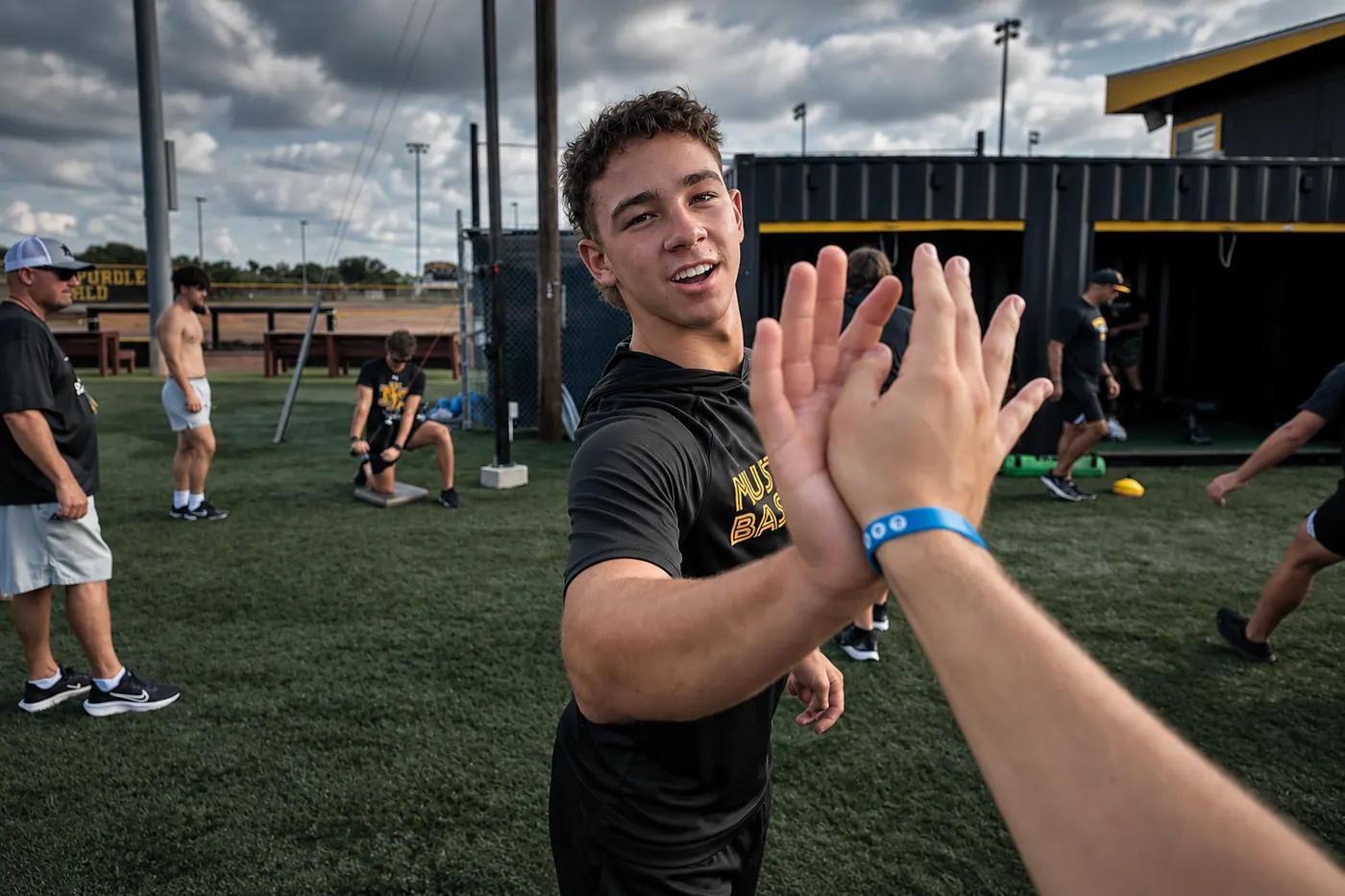
There is something different about an open-air training space connected directly to the field. Music is playing. Teammates are moving between stations. Somebody is sprinting. Somebody is lifting. Somebody just improved a personal best.
The training is visible.
I've joked that it feels a little like putting Venice Beach beside a high school athletic field. Not because it looks like Venice Beach, but because the energy is out in the open.
Athletes see other athletes working.
That matters.
The “Cool Factor” Is Real
Coaches may not always like to admit it, but young athletes care about their environment.
They notice when a space feels organized. They notice good equipment. They notice lighting, music, and whether a facility feels like it was intentionally built for athletes.
That doesn't mean a school needs a professional-sports budget.
It means the experience matters.
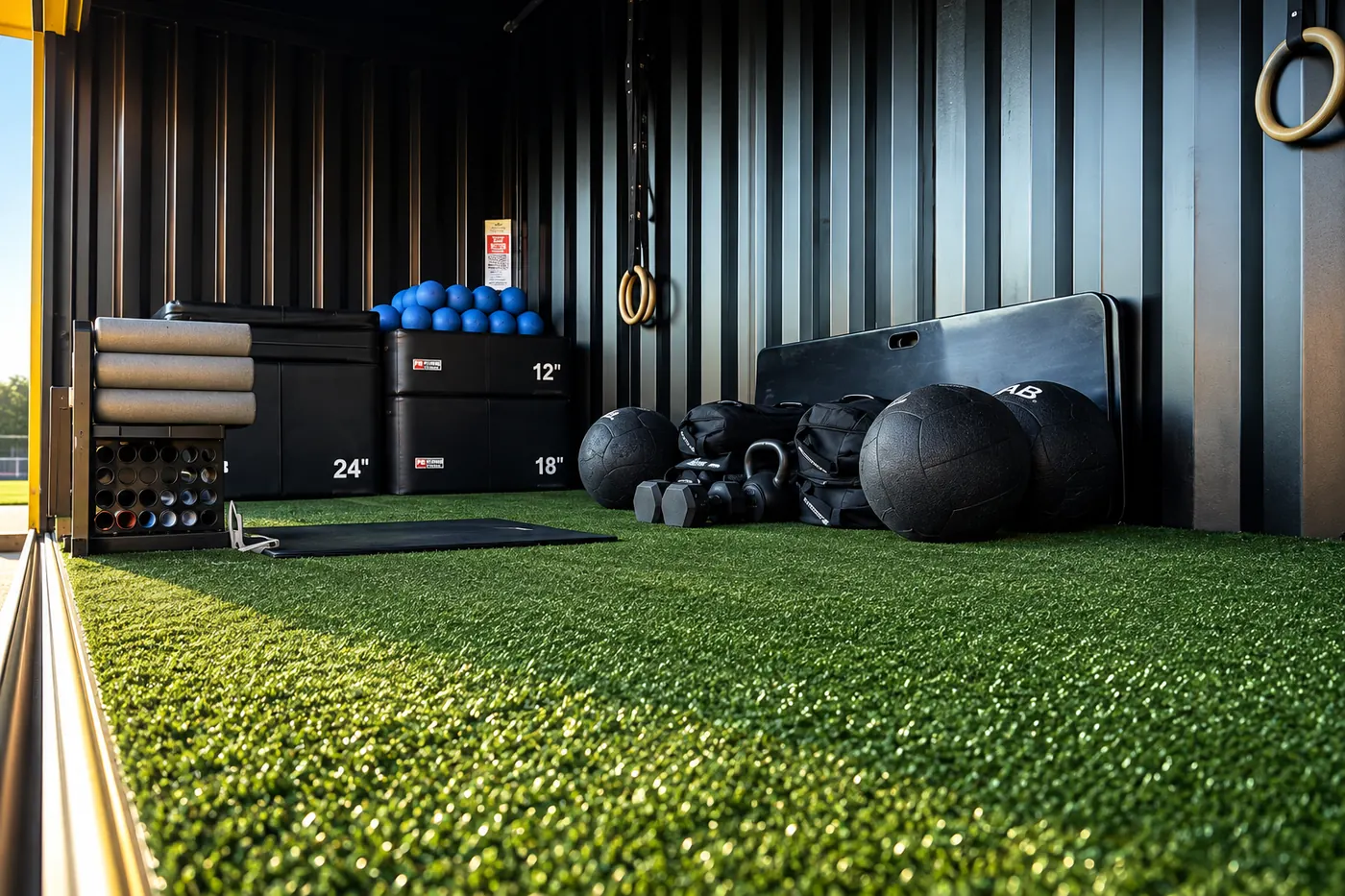
Our athletes increasingly treat the FLXPOD as their preferred place to train. Everything has a place, the equipment is easy to access, and the training happens right beside the field they already consider home.
That has also created another benefit we didn't fully appreciate at the beginning: recruiting and retention.
It Has Become Part of the Program's Identity
High school athletics isn't professional recruiting, but programs still compete for attention.
Families choose communities. Younger athletes decide which programs they want to become part of. Feeder programs influence the future of high school teams. And athletes decide whether an environment feels like somewhere they want to stay.
When younger players visit our facility now, they don't just see a field and batting cages. They see older athletes training. They see speed work, strength training, and teammates competing together.
They can picture themselves being part of it.
That makes the performance environment part of the identity of the program, not simply somewhere athletes go to exercise.
We are also asking the system to operate inside a highly competitive baseball program where development expectations are high. That makes it a useful proving ground. If something doesn't work, we usually find out quickly.
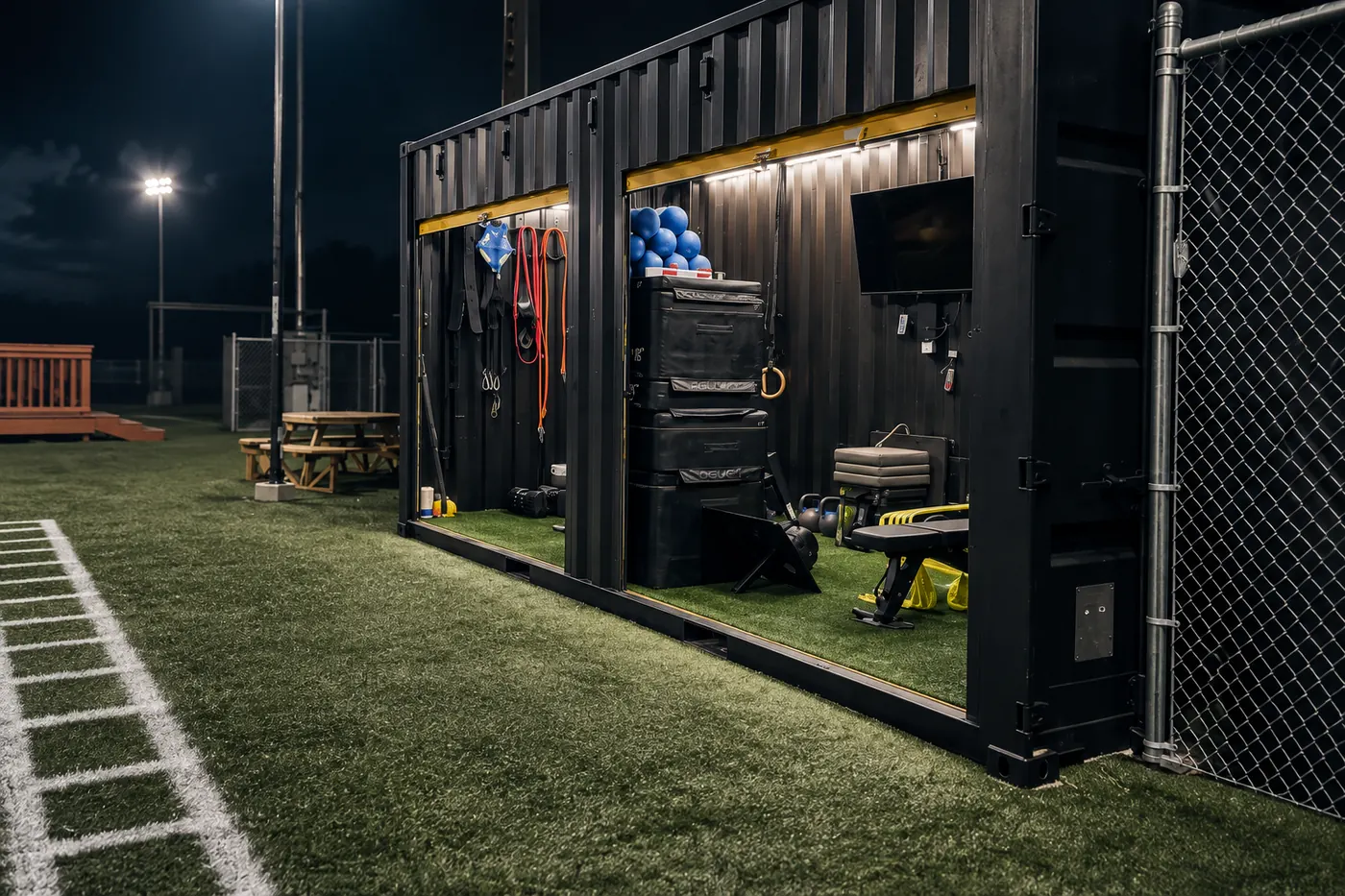
Then the Lights Came On
There was one evening when the entire idea finally felt real to me.
The FLXPOD lights were on. Athletes were training. Music was playing. The field was right there. Equipment was organized and people were moving through the space exactly the way we had imagined.
There had been a lot of planning, setbacks, redesigns, and moments where we wondered whether the idea could actually be pulled off.
Standing there that night felt a little like my Field of Dreams moment.
Not because the work was finished.
Because it was finally alive.
What We've Learned So Far
We're still learning. This isn't a laboratory study, and we don't pretend that one summer and one school year answer every question.
But the lessons so far are pretty straightforward.
Putting training resources close to practice saves time. Athletes are more likely to train consistently when training is convenient. A relatively small footprint can create a surprising amount of capacity when the surrounding space is used intelligently. The environment itself can influence athlete engagement and team culture. And in our first deployment, the economics proved more favorable than we initially expected.
The summer showed us athletes wanted it. The revenue showed us the first unit could pay for itself. The school year is showing us that athletic development can fit inside the normal rhythm of practice instead of competing with it.
We're still adding equipment, refining layouts, improving programming, and learning how efficiently we can move athletes through the system.
That's the point.
FLXPOD isn't being developed in a conference room. It's being developed on the field.
For a long time, the question was whether this idea could actually work.
We've answered that.
Now we're finding out how far we can take it.